GB
  
You are currently viewing the United Kingdom version of the site.
Would you like to switch to your local site?
12 MIN READ TIME

Screen

The fallout

Christopher Nolan’s ‘Oppenheimer’ is the latest film to consider the atomic bomb— but the bomb detonated itself across our culture decades ago

Our critics

The atomic bomb was always destined for stardom. Its cultural shadow was long, even before the first mushroom cloud rose from the American desert.

At Los Alamos, New Mexico, the scientists of the topsecret Manhattan Project seemed to intuit that this was so. When they weren’t conducting the most dangerous experiments in history, trying to beat the Nazis in the race to create a nuclear weapon, they immersed themselves in creative performance. As the countdown ticked away to the decisive (and successful) Trinity Test of the so-called “gadget” on 16th July 1945, the scientists filled their evenings with song, amateur dramatics and performance.

J Robert Oppenheimer, the director of this $2bn mission, put on a production of Joseph Kesselring’s Arsenic and Old Lace. In the Fuller Lodge dining hall, Edward Teller—the Hungarian-American theoretical physicist who would go on to become the father of the H-bomb and Oppenheimer’s mortal foe—played on his Steinway grand piano. Otto Frisch, an Austrian-British scientist and world-class pianist, would also entertain his colleagues in the evening.
© FLIXPIX / ALAMY STOCK PHOTO

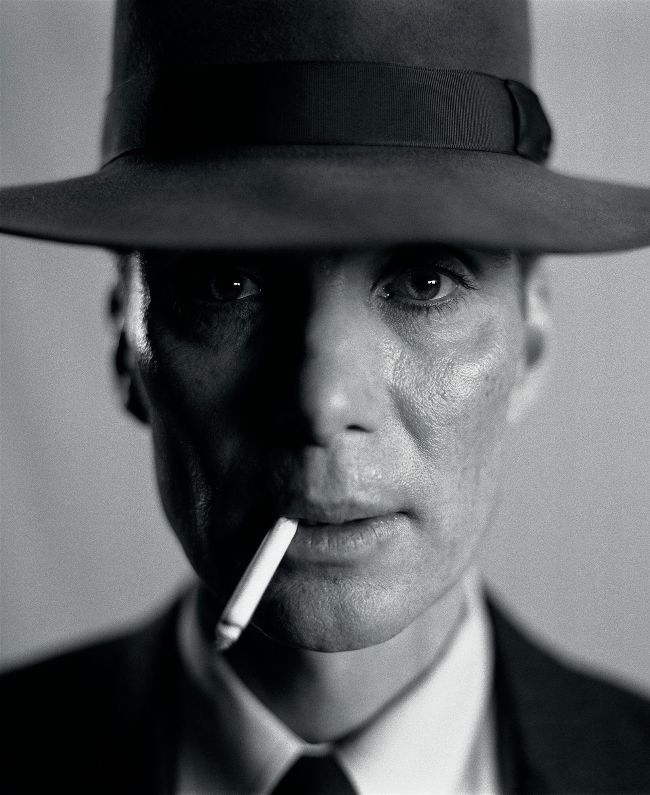
By day, the team’s work— depicted in Christopher Nolan’s epic new movie Oppenheimer (in cinemas from 21st July)—sent its prodigiously talented members hurtling towards the deadliest recesses of quantum physics and the production of a bomb that might, conceivably, set fire to the Earth’s atmosphere. Small wonder that they relished cultural distraction when they were off-duty.

Yet there was always more to it than that. The powers with which they were experimenting would test the very limits of the imagination. The bomb was the most terrifying thing in the world. It was also the most transfixing spectacle ever seen by humankind.

“This is the greatest show on earth,” Captain Harold Kinne told his men in 1953 at the Yucca Flat testing site in Nevada. “Relax and enjoy it.”

As crass as such fairgroundattraction language sounds, Kinne was on to something. The atomic bomb could not be contained by science, politics, military strategy or the espionage of the Cold War. It drilled deep into the human psyche, demanding an audience. It exploded culturally, as well as physically.

Read the complete article and many more in this issue of Prospect Magazine
Purchase options below
If you own the issue, Login to read the full article now.
Single Digital Issue Summer 2023
 
£5.99 / issue
This issue and other back issues are not included in a new subscription. Subscriptions include the latest regular issue and new issues released during your subscription. Prospect Magazine
PRINT SUBSCRIPTION? Available at magazine.co.uk, the best magazine subscription offers online.
 

This article is from...


View Issues
Prospect Magazine
Summer 2023
VIEW IN STORE

Other Articles in this Issue


Lives
Let’s talk money
Tilly Lawless
Screen time
Tom Martin
My unexpected conversion
Sarah Collins
Room for regret
Sheila Hancock
Bishop to…
Alice Goodman
The worst age
Alice Garnett
Taking a break
Michael Brearley
Features
Nazis in the cellar
Unlike many refugees who fled fascism in Austria, Hella Pick has never worried about returning to her native country. But with antisemitism on the rise, she asked its past and present leaders whether there’s anything to fear
Ruling the waves
The royal family has made millions from the exploitation of the seabed—a resource that belongs to us all. Now is the time, writes Guy Standing, for the Crown to put people and planet ahead of profit
Imagining armageddon
In the 1960s, an American strategist theorised that nuclear war need not be catastrophic. Now back in vogue, are the ideas of Herman Kahn mad, bad and dangerous—or a guide to avoiding annihilation?
Can it think?
In the breathless response to the rise of powerful new artificial intelligence, we may be overlooking the most fundamental issue of all: what it actually means to have a mind
Worst chancellor ever?
One man’s small-state mania drove the country to the brink of ruin. Years on, the architect of austerity has departed the political scene— but the human impact of his choices is all around us
Throwing away the keys
Bill Keller, former editor of the New York Times, has documented the appalling dysfunction of the US criminal justice system. Now he watches on as UK prisons head the same way
The last escape
Archive Books in central London, with its toppling book towers and rubble bags full of sheet music, offers serendipity and a refuge from cloned high streets. But for how much longer?
Is green growth the future?
We asked Sam Fankhauser, professor of climate change economics at the University of Oxford, and Kate Raworth, author of ‘Doughnut Economics’, how to build an economy that supports rather than damages nature and the climate
Talk the talk:
A glossary of terms
The promise of freedom
Human existence is laced with tragedy. We can find hope in the work of Isaiah Berlin, who thought we should never stop striving to be free
The Culture
Prozac or Presocratics?
Let’s see whether the ancient Greeks can make us feel better this summer…
Feeling through the dark
A new book about the Irish killer Malcolm Macarthur is about as good as true crime gets—in part because it recognises the genre’s limitations
The man who would be Keir
Wes Streeting could be Labour’s next leader. His new memoir tells us much about what he is—but not why
The age of the hack
A new book tells the history of computer hacking, from Hillary Clinton’s emails to remote-operated dildos. Can our safeguards ever be strong enough?
Politics behind the veil
John Rawls is the philosophers’ philosopher, but a dubious guide to sorting out the messy real world
Books for the beach
Recommended summer reading
Classical: Echoes of war
Our new columnist, Ian Bostridge, has sung Britten’s ‘War Requiem’ almost 100 times. Its resonances are different—but clear—wherever it is performed
TV: Stop this Carrie on
The women from ‘Sex and the City’ are back: older, not necessarily wiser, and struggling to escape from their own pasts
Stage: Theatre is sacred
Audiences shouldn’t profane it with their noisy babble, ebullient picnics—and wandering hands
Film: The boundary in the frame
Films about cricket grapple with the cultural and social implications of this imperial sport
Front
Contributors
The writers in this month's issue
The Grid
Our monthly cut-out-and-keep guide to who falls where on the taste hierarchy
People
Kate Ashbrook
Lots in common
Katie Carr
Picking up the paddle
Ellie Wilson
Call for justice
John Gummer
True blue green
Diana Fleischman
Punishing work
Regulars & Columns
Brief encounter
Sadiq Khan, mayor of London
Inheriting a crisis
Sam Freedman
The joy of lex: Family words
Sarah Ogilvie
Russia’s evil is being turned back on itself
Alexander Etkind
Diary
Caroline Lucas, MP for Brighton Pavilion
Stephen Collins
Tory Wilderness Tours
Harmful tech? Just say no
Ethan Zuckerman
Letters
Words from our readers...
Surrogacy, unethical? It’s complicated
Julian Baggini
Puzzles
Crossword
Plus Bobby Seagull's brain teaser
Chat
X
Pocketmags Support