GB
  
You are currently viewing the United Kingdom version of the site.
Would you like to switch to your local site?
9 MIN READ TIME

ANATOMY OF A SCRIPT THE SCENE BREAKDOWN

The scene breakdown was once considered an important foundation of a Doctor Who script. JONATHAN MORRIS looks at some examples.
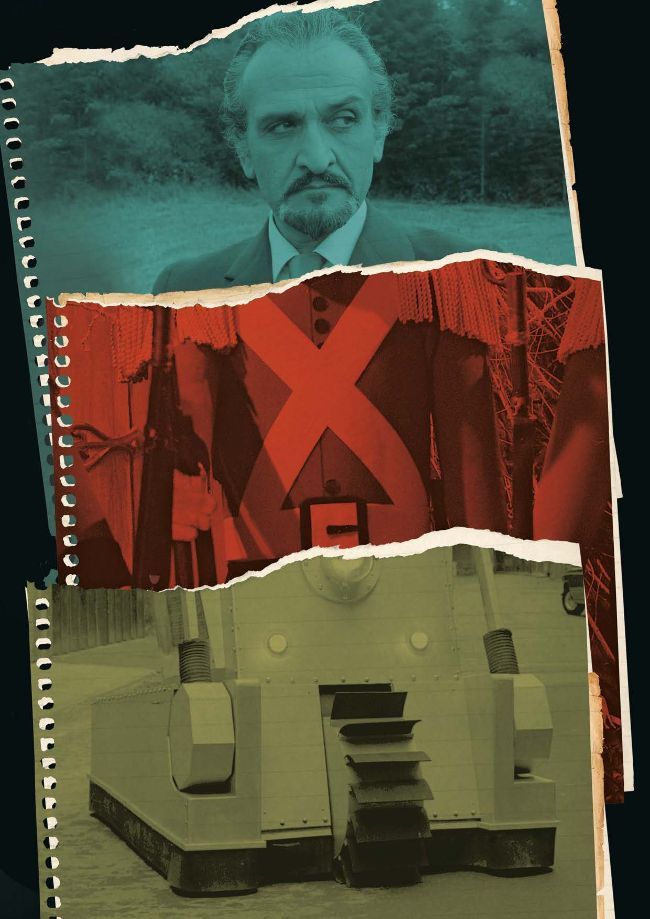
 from top: Roger Delgado as the Master in Terror of the Autons (1971); a clockwork soldier in The Mind Robber (1968); and one of WOTAN’s mobile computers in The War Machines (1966).
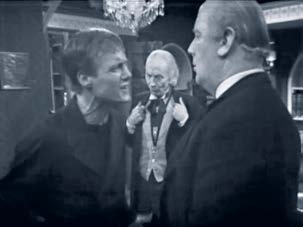
Above from top: Ben (Michael Craze), the Doctor (William Hartnell) and Sir Charles Summer (William Mervyn) in Episode 3 of The War Machines; the Doctor, Ben and Polly (Anneke Wills) arrive on the coast of Cornwall in Episode 1 of The Smugglers (1966).
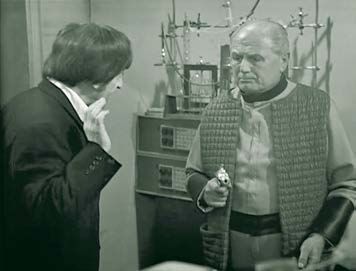
Left: The Doctor (Patrick Troughton) meets Eldred (Philip Ray) in Episode One of The Seeds of Death (1969).

Fin the story, describing in the space of a paragraph or two everything that happened in each scene, including who was in it and where it was to take place. This also included whether it was to be recorded in the studio or pre-recorded on film, and, if on location, whether it was day or night. or much of the 20th-century run of Doctor Who, the next stage after the outline usually required the writer to provide a scene breakdown.

This would consist of a complete list of scenes There were several reasons for asking for a scene breakdown (also known as a ‘scene-by-scene’ and a ‘story breakdown’). The most important was that, during the early years, Doctor Who was put together in a similar way to soap operas like Compact (1962-65) and Crossroads (1964-88), with a rapid turnaround of scripts. Making sure an episode could be achieved within the show’s budget and schedule before a full script was written would obviate the need for any time-consuming rewrites later on. Once the breakdown was agreed all the writer had to do was stick to it – or at least to deviate from it as little as possible.

Read the complete article and many more in this issue of Doctor Who Magazine
Purchase options below
If you own the issue, Login to read the full article now.
Single Digital Issue DWM Special 57: Writing Doctor Who
 
£5.99 / issue
This special issue is not included in a new Doctor Who Magazine subscription. Subscriptions include the latest regular issue and new issues released during your subscription.
Annual Digital Subscription £54.99 billed annually
Save
47%
£4.23 / issue
PRINT SUBSCRIPTION? Available at magazine.co.uk, the best magazine subscription offers online.
 

This article is from...


View Issues
Doctor Who Magazine
DWM Special 57: Writing Doctor Who
VIEW IN STORE

Other Articles in this Issue


Doctor Who Magazine
Writing Doctor Who
When I started working for Doctor Who Magazine, which
How to write Doctor Who The 1960s
Much of the creative groundwork for Doctor Who was established in guidelines and other advice to prospective writers. ALISTAIR McGOWN describes the contribution made by of the series’ earliest story editors
COMIC CUTS
The second Dr Who Annual, published by World
David Whitaker
David Whitaker played a crucial role in shaping the series we know today. SIMON GUERRIER considers the profound influence of Doctor Who’s first story editor
Terry Nation
Terry Nation has  received widespread acclaim as the creator of the Daleks, but  OLIVER WAKE argues that the prolific writer was also one of the grand architects of Doctor Who
THE 1960s
MATTHEW KILBURN explains how Doctor Who’s earliest writers defined the structure and parameters of the series for years to come
FIRST IN, FIRST OUT
Far left inset: Anthony Coburn. Left: The first
ANATOMY OF A SCRIPT THE PITCH AND OUTLINE
JONATHAN MORRIS describes the earliest stages in the evolution of a Doctor Who story
THE SERIES PITCH
Above: Julian Glover as Richard the Lionheart and William
Gerry Davis & Kit Pedler
SIMON GUERRIER dissects the scripts written by two of Doctor Who’s leading visionaries, discovering a blurred line between science and science fiction…
Terrance Dicks
The man who wrote more Doctor Who novelisations than any other author was also one of the series’ most accomplished script editors. JOHN DORNEY reflects on Terrance Dicks’ rich legacy
BARRY LETTS
Above left inset: Jon Pertwee (as the Doctor),
THE 1970s
The decade that brought us some of Doctor Who’s best-loved stories was underpinned by bold and innovative scripts, as MATTHEW KILBURN explains
SUM OF THE PARTS
Left: Thea Ransome (Wanda Ventham) becomes one with
THE RUNNING ORDER
Above right: The Master of the Land of Fiction
Robert Holmes
Robert Holmes had already made a significant impact on Doctor Who before he brought his considerable talent and experience to bear as a script editor. EDDIE ROBSON argues that Holmes’ reputation as one of the series’ greatest writers is well deserved
PHILIP HINCHCLIFFE
Right from top: Producer Philip Hinchcliffe; Look-in featured
GRAHAM WILLIAMS
Below left: Producer Graham Williams. Photo © Paula
Douglas Adams
Page 42 could only belong to the writer who reinvented the series with a freewheeling, comedic approach that continues to divide opinion. ALISTAIR McGOWN asks whether the galaxy’s best-known hitchhiker really went too far
How to write Doctor Who The 1970s
ALISTAIR McGOWN wonders whether the Doctor Who writers’ guide compiled by Douglas Adams was essentially misjudged
ANATOMY OF A SCRIPT THE DRAFTS
JONATHAN MORRIS explores the script archive, discovering intriguing alternative scenes and the idiosyncrasies of some of the series’ best-known writers
THE FINAL DRAFT
Above: Peter Capaldi as the Doctor in The Lie
Christopher H Bidmead
Christopher Bidmead set the series on a new course when he became the script editor of the 1980-81 season, as JASON ARNOPP explains
How to write Doctor Who The 1980s
JASON ARNOPP examines Christopher Bidmead’s guidelines, highlighting what he tried to introduce – and what he tried to retain – as he steered the series into its third decade
Eric Saward
Eric Saward was Doctor Who’s script editor from 1982 to 1986. As JAMES COORAY SMITH explains, this turbulent period included some of the most memorable stories of the decade
THE 1980s
During the 1980s nearly 30 writers had stories produced for Doctor Who. All but three were newcomers to the show. JAMES COORAY SMITH offers fresh perspectiveses on some of the decade’s highlights
NEW TO WHO
Left from top: Writers Johnny Byrne, John Flanagan,
ANATOMY OF A SCRIPT THE REHEARSAL SCRIPT
JONATHAN MORRIS looks at examples of Doctor Who’s rehearsal scripts, explaining how and why they could change before filming began
THE READTHROUGH SCRIPT
Above left and centre: Among the cast and
Andrew Cartmel
When Andrew Cartmel took over as the script editor in 1987 he had a dramatic effect on the ailing series. STUART MANNING describes how Doctor Who was briefly revitalised by its new writers
SMITH AND JONES
Above right: Sylvester McCoy and Sophie Aldred (as Ace)
ANATOMY OF A SCRIPT THE CAMERA SCRIPT
The camera script is the director’s template for an episode of Doctor Who – but even this draft can be subject to change, as JONATHAN MORRIS explains
THE SHOOTING SCRIPT
Left: Camille Coduri (as Jackie Tyler) and director Keith
Russell T Davies
The showrunner who introduced the series to a new generation wanted the scripts to be faster, funnier… and less posh. PAUL KIRKLEY looks back at how Russell T Davies achieved his aims
How to write Doctor Who The 2000s
PAUL KIRKLEY examines Russell T Davies’ Doctor Who pitch document, which offered a highly developed vision of a series with more humanity, more emotional intelligence, less mythology – and fewer Zogs
Steven Moffat
TOM SPILSBURY a sks a former showrunner to share some of the wisdom he gathered during his record-breaking tenure. “We are not at home to Mr Subtlety,” says Steven Moffat…
PITCH PERFECT
Below left: Peter Capaldi’s script for Deep Breath (2014)
THE 2000s
EMMA REEVES describes a 21st-century system of commissioning and script editing that has rewritten the rules
THE WRITER - SHOWRUNNER
Far left inset above: Russell T Davies. Far left
Chris Chibnall
EMMMA REEVES looks at the Doctor Who  work of Chris Chibnall – the writer taking the series in a bold new direction
Lost for Words
JONATHAN MORRIS ponders the fate of the Doctor Who stories that seemingly disappeared without trace…
Chat
X
Pocketmags Support