ANATOMY OF A SCRIPT THE REHEARSAL SCRIPT
JONATHAN MORRIS looks at examples of Doctor Who’s rehearsal scripts, explaining how and why they could change before filming began.
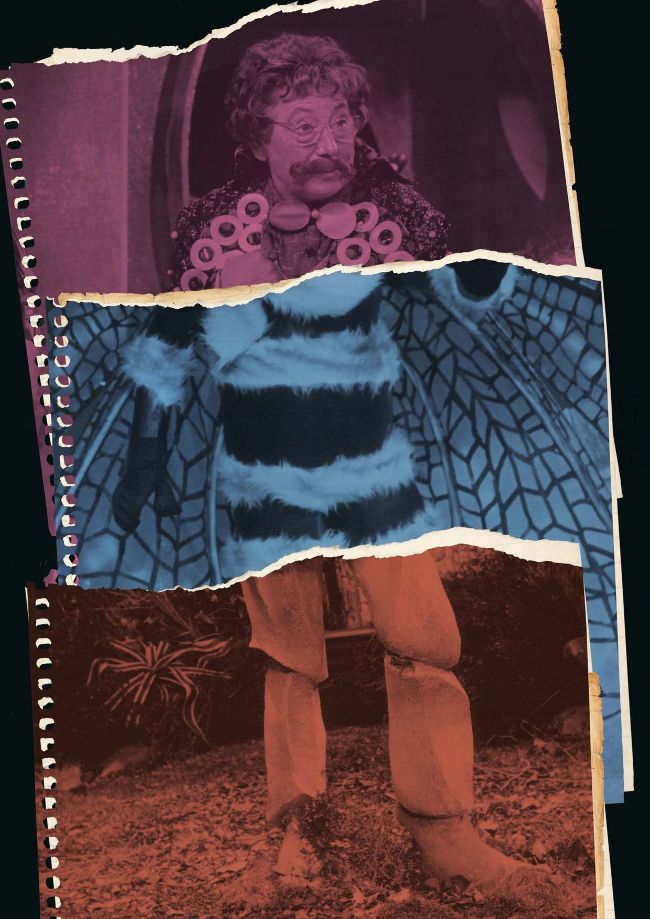
Opposite page from top: Vorg (Leslie Dwyer) in Carnival of Monsters (1973); a Menoptra in The Web Planet (1965); and Melkur in The Keeper of Traken (1981).
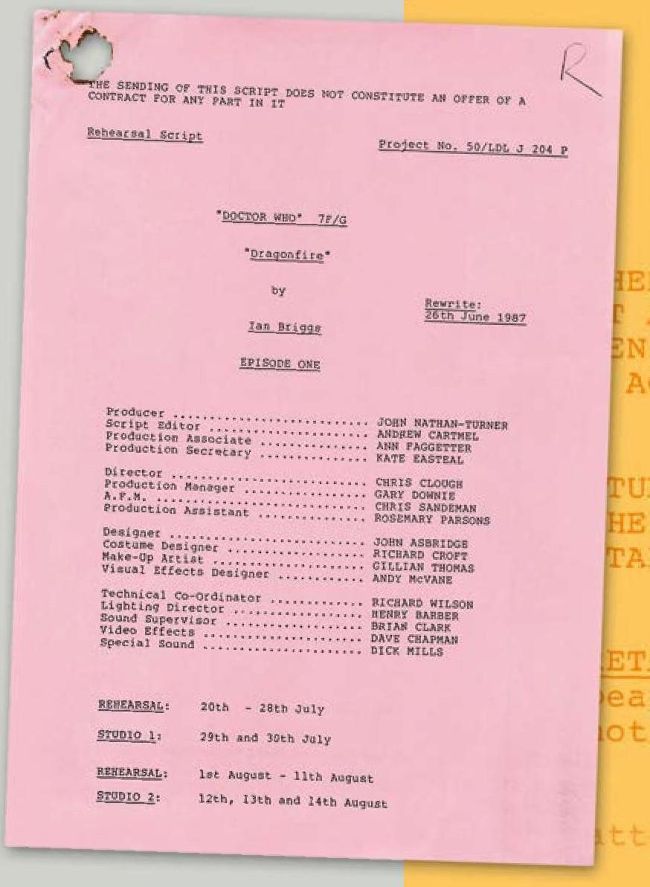
Above: The rehearsal script for Part One of Dragonfire (1987) – note the disclaimer at the top of the page.
Below: A 1960s advert for a mimeograph.
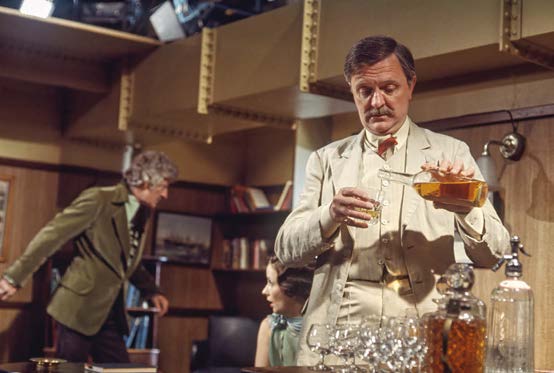
Bottom left: Jon Pertwee (as the Doctor) and Tenniel Evans (Major Daly) on the SS Bernice set of Carnival on Monsters.
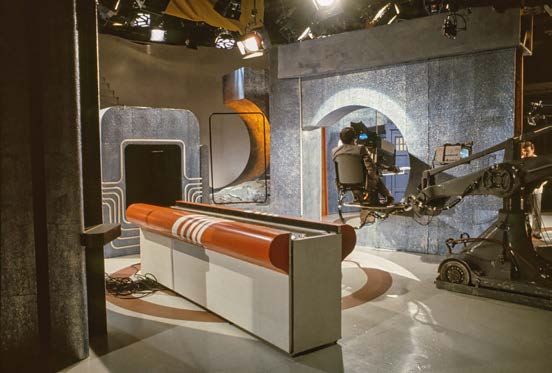
Bottom right: A cameraman on the Carnival of Monsters Inter Minor set.
During Doctor Who’s original run, each studio recording session was preceded by a rehearsal period. This was because each studio session was extremely time-constrained, with much of the day dedicated to technical rehearsals as well as the actual recording, so the cast would be expected to be word perfect to avoid causing unnecessary delays.
For the series’ first seven years, stories were recorded one episode a week, every Friday – except from Episode 1 of The Tenth Planet (1966) to Episode 5 of Fury from the Deep (1968), which were recorded on Saturdays. With Terror of the Autons (1971), the schedule changed to two or three days of recording every two weeks, with each ‘block’ based around recording material utilising certain sets and cast members – so that, for instance, all the scenes using the UNIT laboratory would be recorded in the first block.
A good example of this is Carnival of Monsters (1973), where all the scenes on the SS Bernice and inside the miniscope were recorded in the first block and all the scenes on Inter Minor were recorded in the second, so no sets had to be re-erected and the only cast members required for both blocks were the regulars, Jon Pertwee and Katy Manning. Initially, scenes were still shot in story order but by the end of the 1970s the process was normally to shoot on a set-byset basis to speed things up. Indeed, veteran director Alan Bromly made few friends when he attempted to use the old ‘story order’ approach for Nightmare of Eden (1979).