Say hello, wave goodbye
What an amazing ride it’s been. As Mac OS X faces the final curtain, let’s remember 20 years of OS excellence
WRITTEN BY CARRIE MARSHALL
From the first beta in 2000 to Catalina in 2019, Mac OS X continually raised the bar for what personal and pro computers can do. It made computers easier and more entertaining, more personal and more powerful, and it was a key part of the most extraordinary period of innovation the world has ever seen.
Mac OS 9 was a worthwhile upgrade but the next big thing would be a cat
It also featured a lot of cats
Before OS X, Apple was not in good shape. This Apple was not the Apple of Steve Jobs. It was the Apple of Gil Amelio, of poor quality products and a thoroughly dysfunctional corporate culture. This Apple wasn’t working. According to Steve Jobs, Amelio believed that “Apple is like a ship with a hole in the bottom, leaking water, and my job is to get the ship pointed in the right direction.”
That ship was floating on the back of System 7, the operating system first released in 1991. Development of its successor, Copland, began in 1994 but was never completed despite a beta release to developers in 1995. Copland was an attempt to stave off disaster. Macs were considerably more expensive than Windows PCs, and Windows 95 seemed likely to narrow the distance between Windows’ famously unpleasant interface and the Mac’s more user-friendly approach. Apple was losing market share and Copland was the solution.
At least, it might have been if it had ever been released. It was a multi-user, multitasking operating system with extensive customisation and ran natively on the PowerPC processors Apple now used in its Macs. It would be more efficient, more flexible and it would crash a whole lot less. But it never shipped. The planned 1996 release date slipped to 1997 amid ever-growing complexity and a $250m per year budget - money that Apple could ill afford. Copland was cancelled in 1996.
With Copland dead, Apple turned its gaze outward. Amelio considered buying BeOS from Be Inc, but those negotiations floundered. Be wanted $275 million; the troubled Apple said it could and would not pay more than $200 million to acquire an OS. Just months later, Apple bought a different OS for $429 million.
That OS was OpenStep, which was the product of Steve Jobs’ company NeXT. Jobs had founded the firm in 1985 after being forced out of Apple, and when Apple bought the company in 1997 he returned to Apple in an advisory role.
By the summer of 1997, Jobs had ousted Amelio in a boardroom coup; he became Apple’s interim CEO that autumn.
It took time to bring OpenStep to the Mac, and in the meantime Apple produced two more versions of the Mac OS. Mac OS 8 was released in 1997 and introduced the new Platinum interface. It was nice enough but the internal numbering - it was branded internally as Mac OS 7.7 - demonstrated that it was more of a marketing exercise, a point release rather than a major new version.
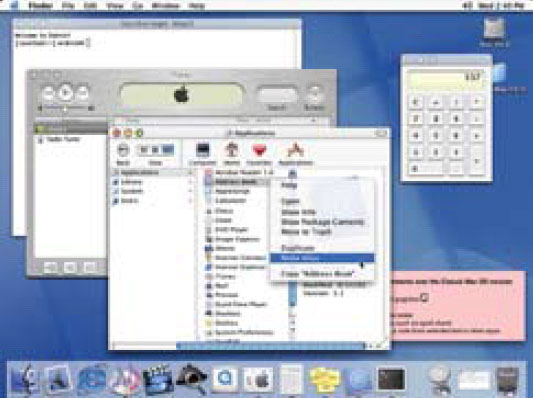
OS X really did Think Different, not just in terms of how the Mac OS should work but how it should look.
The final Mac OS before OS X changed everything was Mac OS 9, which shipped in 1999. It was “the best internet operating system ever,” according to Apple’s promotional blurb, and it integrated the new iTools suite, enabled you to search the internet with Sherlock 2 and introduced automatic software updates. It was a worthwhile upgrade, but it was also the end of the road for System 7 and its successors. Apple’s next big thing would be a cat.