Long-Distance
Runarou nd
Marillion’s Mark Kelly has taken a rather circuitous route to releasing his first solo album, Mark Kelly’s Marathon. Prog finds out how the keyboardist’s new project came about and learns the story behind those Wakeman-esque solos.
Words: Nick Shilton Portraits: Pit Lad
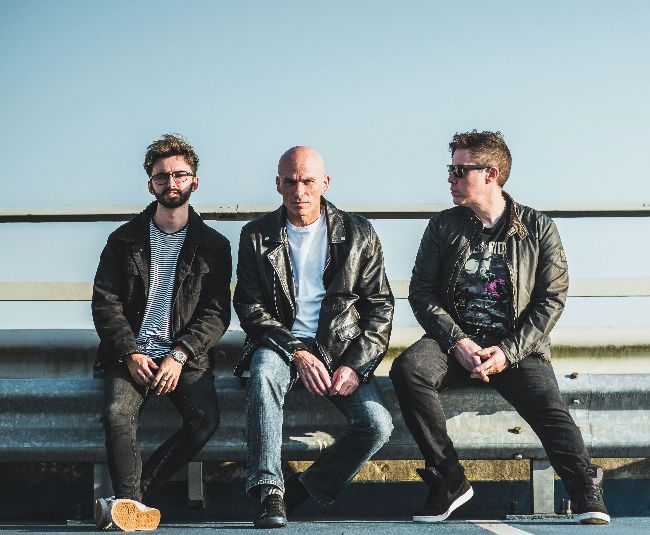
Marathon, L-R: Conal Kelly, Mark Kelly, Oliver Smith.
“I thought I’d follow in the footsteps of Rick Wakeman, pick a theme and do an instrumental album. I never really got past the early stages.”
Consider, to name but three, Genesis, Yes and Pink Floyd. For members of certain bands occupying the upper echelons of progressive rock, it was standard operating procedure to intersperse solo albums with group releases at suitable points. Despite their myriad successes over the last four decades-plus, Marillion may not sit exactly alongside the aforementioned triumvirate, but they don’t fall far short.
Vocalist Steve Hogarth, guitarist Steve Rothery and bassist Pete Trewavas have all pursued extracurricular endeavours beyond Marillion, with Hogarth releasing his Ice Cream Genius album as far back as 1997 and Trewavas arguably having attained greatest acclaim outside Marillion through his membership of prog supergroup Transatlantic since 1999. By contrast, talk of keyboardist Mark Kelly pursuing a solo career has bubbled sporadically for over a quarter of a century but with no significant output.
“It was my own fault really,” Kelly says of expectations that were raised long ago but are only now being met. “I got caught up with the idea of joining the solo album brigade and for years people would ask me about it.”
Back in the last millennium, Kelly did formulate an initial solo album plan. “I thought I’d follow in the footsteps of Rick Wakeman, pick a theme and do an instrumental album.” He alighted on Dante’s Inferno, from Divine Comedy, as said theme before hitting a significant stumbling block.