Managing expectations
These premium executive cars were the kings of the company car park when new.They’re just as classy seven years later, and great value, too
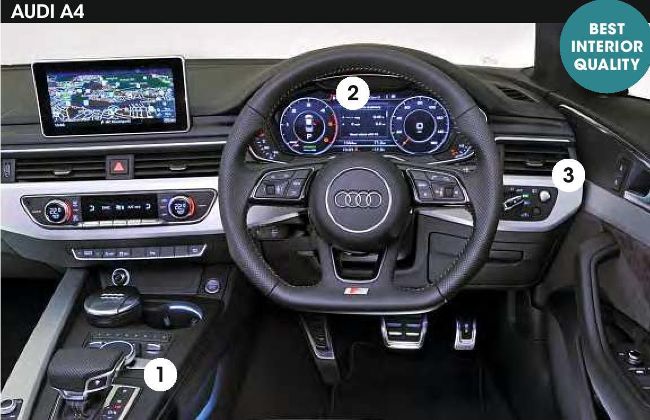
1 The rotary controller for this generation of A4’s infotainment system is easier to use than the touchscreen in later car 2 Digital Virtual Cockpit display is a desirable option that presents a wealth of driving information clearly 3 A4’s dashboard looks and feels fabulous; it’s beautifully put together and every switch works with a pleasing precision
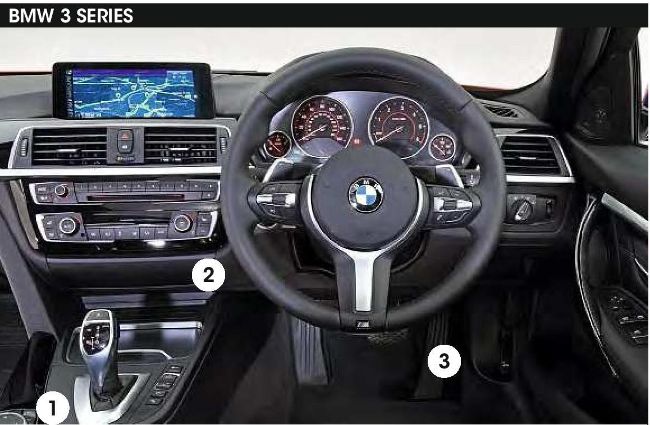
1 There’s a traditional handbrake lever behind the gear selector, whereas the A4 has an electronic parking brake 2 Dashboard is bulkier and more confining than the A4’s, but the controls are easily reached and can be seen at a glance 3 As with the A4, the pedals are offset slightly to the right, but both cars’ seats and steering wheels line up perfectly
Photography:Will Williams
WHEN AN EXECUTIVE car is fresh from the factory, its keys will often go to a company car driver who, on top of seeking the prestige badge and able performance such cars can offer, may well be looking for healthy fuel economy and low CO2emissions figures in order to achieve a lower tax bill.
A used executive car, however, will attract a far wider clientele than a new one. Its lower purchase price will attract a great many private buyers, for whom good fuel economy allied with an upmarket image holds just as much allure. Take the Audi A4 and BMW 3 Series as examples. Both have classy, good-quality interiors and well-sorted driving dynamics. Plus, when bought at seven years old (as we’re testing them here), they can both be had for a heck of a lot less than the equivalent new version will cost you today.