WHAT MAKES SHIMANO TICK?
A WHIRLWIND TOUR OF FAR EASTERN SHIMANO FACTORIES LEAVES CHIPPS NO CLOSER TO UNDERSTANDING THIS ENIGMATIC, SECRETIVE BRAND.
WORDS AND PICTURES BY CHIPPS ADDITIONAL PICTURES BY SHIMANO
Cycling is a world of contrasts. Shiny components peddled by smooth-talking salesmen are then taken into the mountains to be ground down by rain and rocks. Today’s rough prototypes are ridden extensively in secret to help make tomorrow’s smooth-looking, mass-market gears and gadgets. Racers ride the latest carbon-reinforced minimalist shifters so that you and I can have something better to ride five years and three groupsets down the line. Companies go out of their way to keep next year’s products under wraps for fear of damaging this year’s sales, yet next year will go overboard in their efforts to make sure that everybody hears about the new stuff.
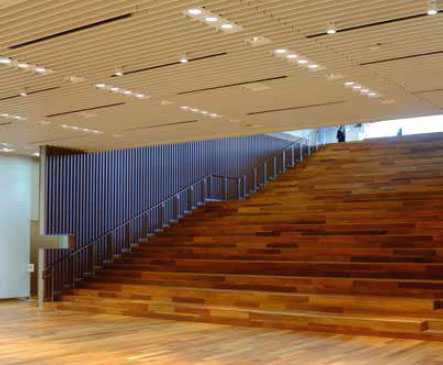
The new factory sure does look the business.
Nowhere is that contrast sharper than with Shimano. On one hand it is the largest manufacturer of bicycle components in the world, making mundane, workaday hubs for town bikes and cantilevers for kids’ bikes. On the other hand it has one of the most innovative design labs, pioneering the use of electronic shifting and complex forged hollow cranks. It is at the same time both very public and very secretive. Its components are both aspirational and cutting-edge and yet ubiquitous and dull in their quiet ability to get the job done.

The officer to visit Shimano’s newly remade head office and its Sakai Intelligence Plant in Osaka was something I’d been looking forward to since hearing about the complete re-engineering and rebuilding of the entire factory three years ago. Space in Japan is tight and Shimano’s need to revamp its head office involved a complicated three-year-long rebuilding campaign that systematically disassembled the factory in place, then modernised and rebuilt it without missing a single day of production.