TOTAL ECLIPSE
In early 1972, Pink Floyd were mulling over ideas for their next record, with no real direction in mind. A year later they emerged from Abbey Road with an album that would overshadow everything they had done before. This is the story of their journey to The Dark Side Of The Moon.
Words: Hugh Fielder
Photos: Jill Furmanovsky and Storm Thorgerson; JILL FURMANOVS
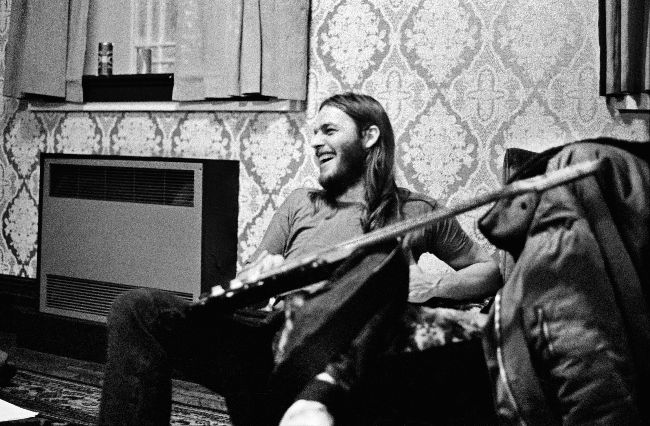
David Gilmour during
Floyd’s winter tour of 1974.
In November 1971, Pink Floyd returned from a five-week US tour and took stock before making plans for the following year. Their latest album, Meddle, had been released earlier that month. It was dominated by the side-long epic Echoes that they had laboriously pieced together over the course of recording sessions during the first half of the year. Starting with an accidental ‘ping’ as Rick Wright set up his keyboards in the Abbey Road studio, the piece had the less-than-optimistic working title Nothing, which had gradually progressed to Son Of Nothing and then Return Of The Son Of Nothing.
"We were used to all these reverent fans who'd come and you could hear an pin drop."
David Gilmour
Nonetheless, the band were satisfied with the final piece. And it had gone down well when they premiered it at the first Crystal Palace Garden Party, in May 71, an event they headlined over the Faces and Mountain. PA company WEM had supplied a 2,600-Watt sound system for the Hollywood Bowl-style stage, with new bass bins, parabolic reflectors and horn speakers that it was said had stunned and killed most of the fish in the lake that separated the stage from the audience. The fish had also been harassed by a 40ft inflatable octopus that rose up during the finale of A Saucerful Of Secrets, another lengthy instrumental, amid billowing clouds of coloured smoke.
All of which served to distract from Pink Floyd’s perceived lack of personality. Which didn’t bother the faithful, who were perfectly happy to sit on the grass, roll a few and soak up the carefully constructed dynamics of Floyd’s soundscapes and whatever visual effects the band threw in for good measure.
It bothered the rock press, though, who were in thrall to the gladiatorial excesses of bands like the Rolling Stones, Led Zeppelin, ELP, The Who, Jethro Tull and Yes as they barnstormed their way around America. In contrast, Pink Floyd’s studied anonymity, their growth by stealth out of the underground movement of the late 60s, their refusal to wave their willies around on or off stage, was almost an affront.
But the press had to be a bit circumspect. A recent Melody Maker readers’ poll had put Floyd second behind ELP in a list of favourite British bands. It would be unwise for any hip rock journo to pour too much scorn on Floyd and risk alienating their readers. Their previous album, Atom Heart Mother, featuring another side-long epic, had reached No.1, and even though the highest chart positions were currently being monopolised by the flamboyance of Zep’s Four Symbols, ELP’s Pictures At An Exhibition, Rod Stewart’s Every Picture Tells A Story, John Lennon’s Imagine and T.Rex’s Electric Warrior, Meddle was clearly going to sell a lorra lorra copies.
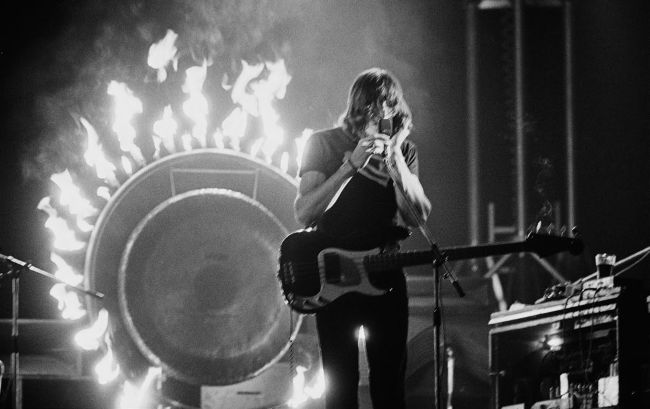
Waters going for the gong at London’s Rainbow Theatre in 1972.
MAIN: JILL FURMANOVSKY; TOP INSET: ALAMY; BOTTOM INSET: DAVID WARNER ELLIS/GETTY
So the music press had to suck it up and run quotes from drummer Nick Mason stating that: “One of the worst possible beliefs is that pop stars know more about life than anyone else. The thing to do is to move people, to really turn them on, to subject them to a fantastic experience and stretch their imagination.” He wasn’t even sure that there was definite course of progress in their music. “People see continuations and progressions, but it’s not apparent to us. We just get an idea for something and then we try and do it.”
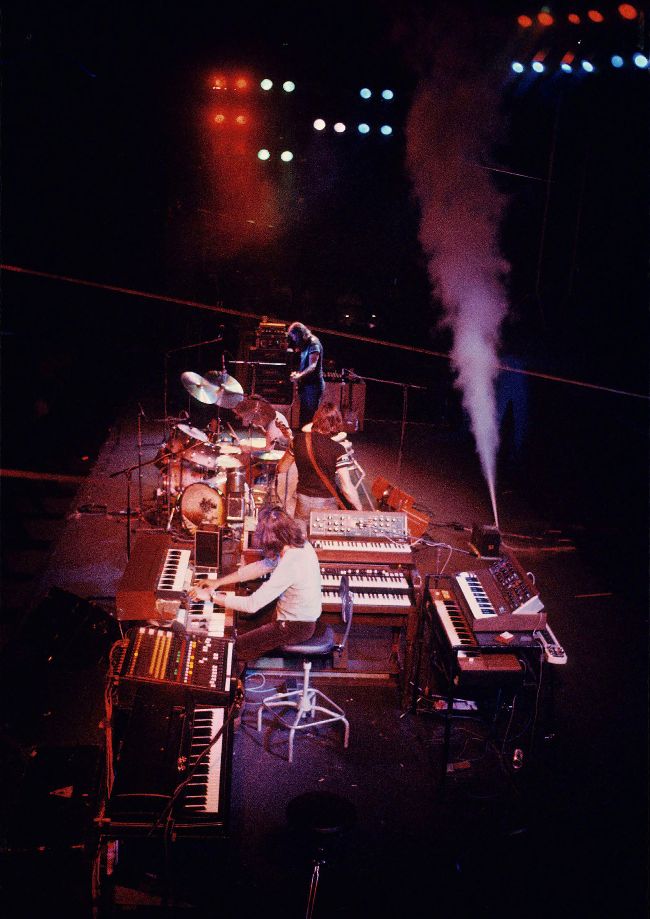
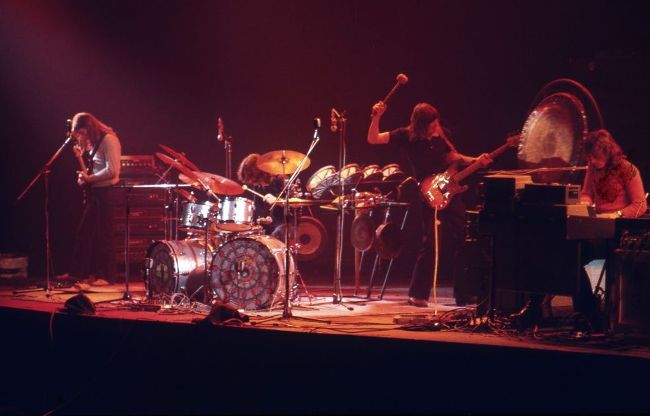
Floyd in concert circa 1973 in Los Angeles.
ALAMY