Replacement dwellings
The best route for planning consent?
Planning expert Julia Riddle investigates whether seeking a knock down and rebuild opportunity offers an easier route to getting permission for your dream home
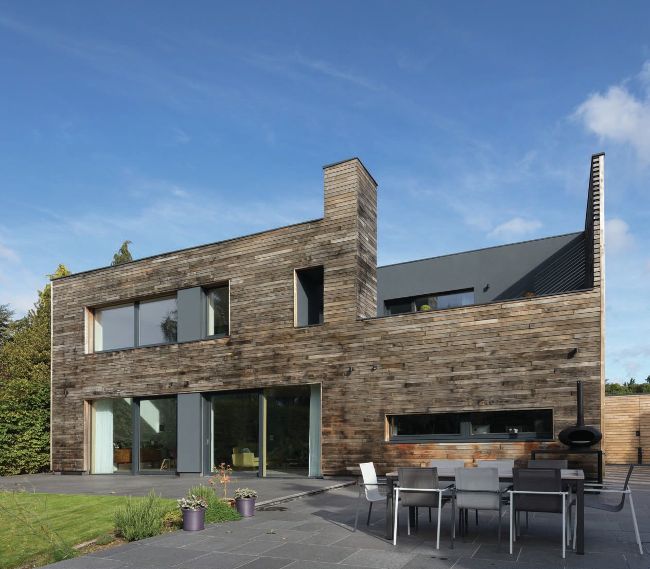
Designed by Gresford Architects (www. gresfordarchitects.
co.uk), this new build Passivhaus replaces a bungalow. It was designed to sit sympathetically in the street scene, harmonising with traditional properties nearby
QUINTIN LAKE
For many self builders, the perfect site for a project may be in a picturesque, rural location, perhaps on the edge of or outside a village or town boundary. It may be a piece of land where nothing has ever been built, perhaps near an existing building, or part of a wider residential or agricultural site that seems to present the ideal spot for a new home. In planning terms, however, this type of site is usually the most challenging to achieve a new house on. Therefore, it represents one of the highest risk options to create your dream home.
Of course, there are alternative options that carry a differing level of risk. For instance, a site that benefits from outline planning consent for a new home comes with significantly less unpredictability. These plots have secured the principle for development, as well as the location and overall scale of the house to be built, with the finer details to be finalised by whomever takes on the opportunity. There’s obviously a price to pay for this advantage and the security that comes with it. But in planning terms the risk is much less, as so much of the initial work has been done to establish consent that a dwelling can be erected in this location.