Beginner’s guide to self-build
There are many benefits to building your own home. It is an opportunity to create a unique home tailored around your lifestyle. It can be a route to creating a home that will adapt as your needs change, for instance and accomodating wheelchair use. It also offers scope to build a property that is low-maintenance and energy efficient.

A HOME WITH A VIEW This self-build was designed to celebrate its coastal location, including a sunken courtyard in the kitchen/dining space and copious amounts of glazing.
* HOMEBUILDING & RENOVATING SELF & CUSTOM BUILD MARKET REPORT 2017
What’s more, self-builders often achieve a larger home and garden compared to buying a new home on the open market - the average self-build project is 247m2*, more than double the size of the average new-build developer home. And, as an added bonus, self-builders typically enjoy a profit of 25% on their investment*.
Once you’ve decided to build your own home, there are some key questions you need to begin answering: where will you build your new home, what do you hope to build, how will you finance your project, who will build it and how will it be built, for instance. Follow our in-depth beginner’s guide to find out how to start this incredible journey…
Finding your self-build plot
It’s the starting point to any self-build dream. Here’s what to consider when plot hunting
You may be fortunate enough to have a plot already at your disposal - a large side garden, for instance. However, for many self-builders, their journey begins with finding a suitable plot.
It’s important to keep an open mind when looking for a plot. Typical plot types do include greenfield sites as well as fully serviced plots offered by developers with self-builders in mind, but plots may also be brownfield land, or old buildings that can be replaced.
In these latter cases, it’s important to consider potential pitfalls such as contamination, which can be costly, but provided you’re careful, there are hidden treasures everywhere. The key is to treat every home as just a temporary occupant of a building plot - once you get into this mindset, opportunities begin to present themselves.
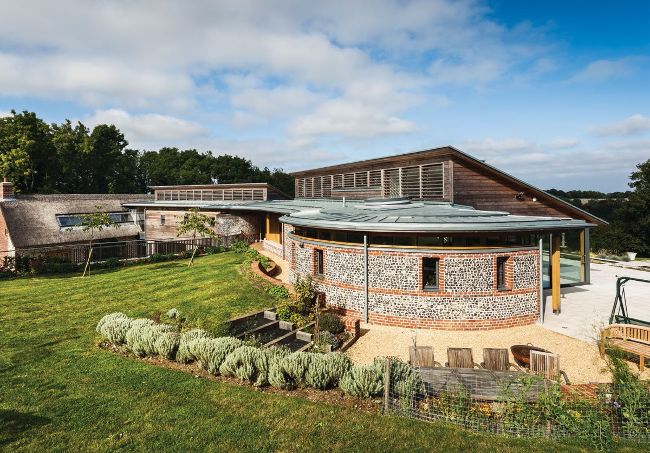
A BOLD PLAN This self-build was designed to look like an old cottage which has been extensively but sensitively extended over time, but with the benefits of being an efficient, modern home
WHAT MAKES A BUILDING PLOT?
A piece of land is not a building plot until planning permission is granted. Access is another key requirement (see box).
If you do identify land with the hallmarks of a potential building plot, then as long as it doesn’t fall outside the settlement boundary or contravene other planning policies, there is nothing to stop you applying for planning permission, even if you do not own the land. If you opt for this route, ensure you have a contract in place with the owner so you can purchase the plot for an agreed sum if you are successful.
More commonly, you will have purchased a plot with outline or full planning permission already in place. The good news is, you can re-apply for planning permission for a design which more closely resembles your dream home. That said, the existing design and planning history will provide a good clue about what is likely to be approved.