Converting a Barn
Transforming an agricultural building could be the path to a bespoke home that’s packed with character. Opinder Liddar reveals the popular design features achievable with this route
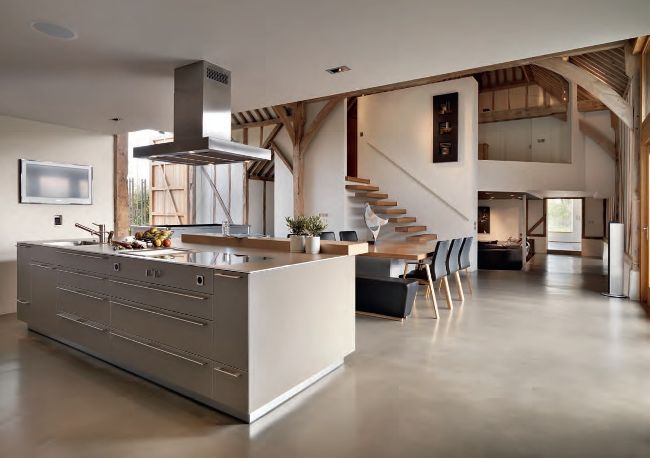
The design team at Kitchen Architecture (
www.kitchenarchitecture.co.uk) created an island to help zone out this semi-openplan space. The large expanses of glass allow natural light to flood through this building’s interior
Finding rural land that is suitable for constructing a new home is becoming increasingly difficult, as planning laws tend to restrict development in green locations. However, there are other opportunities available and, thanks to changes in planning policies, it has now become easier to create housing in the countryside. In some cases you may be able to achieve a bespoke design without the need for a detailed application at all – such as with a conversion project.
Barns are a typical feature of the English countryside, with many having become redundant over the years. These buildings offer vast amounts of space and, done well, can be transformed into amazing abodes.
At Lapd Architects, by following this route we’ve been able to create many innovative dwellings for clients in locations where it would’ve been difficult to erect a new build. This article sets out common features and design approaches to make the most of your conversion.
Adapting the layout
It’s interesting that, from afar, you rarely notice barns in the countryside, as they blend in so well. Perhaps it’s due to the fact they don’t tend to have windows, or aren’t shouting for architectural attention, that they sometimes fit better in the landscape than new structures. However, while they can seem insignificant on the outside, up close I’m often surprised at just how big in plan and height they can be. As such, they offer a lot of freedom when designing a home.