FIXER-UPPERS
Building little plastic cars is a hobby loved by kids big and small. John Evans visits Airfix HQ to see how the kits are created
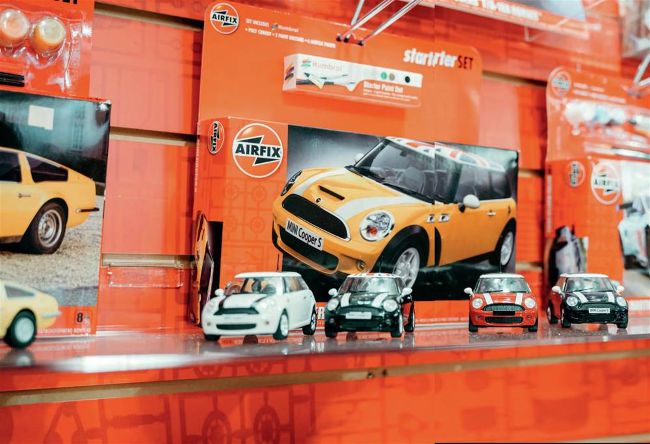
PHOTOGR APHY MAX EDLESTON
Christmas: peace on earth and an Airfix kit to all men. A spot of model-making on the big day is the perfect excuse to duck out of the Queen’s speech. After all, you can’t let the glue go off: there’s a windscreen to attach.
Since men were little boys and women little girls, they’ve been making models. Okay, there’s usually a break of a few decades while they discover other, less plasticky things, but they almost always come back, attracted by the enticing box artwork and, inside, the delicate decals and spindly sprues to which the model’s parts are attached.
Chances are that if not you then someone you know will be wrist deep in glue, plastic and paint this Christmas, batting away demands to slice the turkey in favour of snipping a wheel from a sprue. If they’re an Autocar reader, that wheel is likely to belong to a car rather than an aircraft. If they’ve been lucky this year, it will be something like the 1930 Bentley 4.5-litre Supercharged, the star in Airfix’s Vintage Classics range and, at £110, its best-selling and most expensive car model. It’s a proper beauty and, at 1:12 scale, a big ’un, with a skill level of four meaning its assembler will be working on it until way past Hogmanay.
Other cars in the Airfix Vintage Classics series include a 1966 Jaguar 420, recently reintroduced to the range after original kits became collectable, and a Beach Buggy. All three feature the original box artwork for that authentic period feel. They’re aimed at experienced returnees: lapsed modellers who have the skills – just – to build the cars without cloaking them in a web of dried glue.